
x
 Send Inquiry
 Send Inquiry

 Send Inquiry
L(+) Tartaric Acid
Price 1 INR/ Kilograms
MOQ : 1 Kilograms
L(+) Tartaric Acid Specification
- Molecular Weight
- 150.09 g/mol
- Application
- Food & beverages, pharmaceuticals, cosmetics, and chemical synthesis
- Purity
- 99% Min
- Smell
- Odorless
- Physical Form
- Powder
- CAS No
- 87-69-4
- Shape
- Crystalline
- Melting Point
- 168-170C
- Shelf Life
- 36 months
- EINECS No
- 201-766-0
- HS Code
- 29181300
- Properties
- Optically active (L+), water soluble, crystalline, acidic
- Solubility
- Soluble in water and alcohol
- Appearance
- White crystalline powder
- Poisonous
- NO
- Molecular Formula
- C4H6O6
- Structural Formula
- HOOC(CHOH)2COOH
- Grade
- Food Grade / Industrial Grade / Pharmaceutical Grade
- Storage
- Keep tightly closed, in a cool & dry place
- Refractive Rate
- 1.465
- Ph Level
- 2.2 (1g/10ml H2O)
- Density
- 1.76 Gram per cubic centimeter(g/cm3)
- Usage
- Used as acidulant, antioxidant, stabilizer, emulsifier, and sequestrant
- Product Type
- Organic Acid
- Taste
- Strongly acid
- Ingredients
- L(+) Tartaric Acid
- Sulfate (SO4)
- 0.01%
- Heavy Metals (as Pb)
- 10 ppm
- Loss on Drying
- 0.5%
- Microbial Criteria
- Total plate count 1000 cfu/g, yeast & mould 100 cfu/g, E. coli negative
- Boiling Point
- Decomposes before boiling
- Chloride (Cl)
- 0.002%
- pKa
- 2.98, 4.34
- Residue on Ignition
- 0.05%
- Lead Content
- 2 ppm
- Packing
- 25 kg net in fibre drums with inner polythene liner or as required
- Specific Rotation []20/D
- +12.0 to +13.0 (20C, in water)
L(+) Tartaric Acid Trade Information
- Minimum Order Quantity
- 1 Kilograms
- Supply Ability
- 25 Kilograms Per Week
- Delivery Time
- 3-4 Week
About L(+) Tartaric Acid
L(+) Tartaric Acid
| TITLE OF INDEX | INDEX | RESULT | |
|---|---|---|---|
| Sensory Requirements | Color and Texture | Colourless Or Translucent Crystals Or White Powder | Colourless Or Translucent Crystals |
| Odor | Weak sour | Weak sour | |
| Assy(C4H606)% | 99.7-100.5 | 99.9 | |
| Specific Otation[A] 250C | +12.0-+13.0 | 12.6 | |
| Loss On Drying % | 0.5 | 0.16 | |
| Sulfate Test | Pass Test | Pass Test | |
| Oxalate Test | Pass Test | Pass Test | |
| Arsenic(AS) Mg/Kg | 2 | <2 | |
| Lead PB Mg/Kg | 2 | <2 | |
| Residue On Ignition % | 0.05 | 0.02 | |
Key Uses and Applications
L(+) Tartaric Acid plays a multifaceted role across industries. In the food sector, it acts as an acidulant and emulsifier, enhancing flavor and texture. In pharmaceuticals, it is a valuable stabilizer and excipient, while in cosmetics, it contributes as an antioxidant. It also supports various chemical synthesis processes, demonstrating its versatile benefits.
Quality and Safety Assurance
Our L(+) Tartaric Acid conforms to rigorous standards for purity (99%) and low heavy metal content, keeping lead 2 ppm and heavy metals as Pb 10 ppm. Microbial safety is ensured, with total plate counts 1000 cfu/g and E. coli negative. It is non-poisonous, odorless, and suitable for food, pharmaceutical, and industrial applications.
Storage and Shelf Life
To maintain its quality, L(+) Tartaric Acid should be stored tightly sealed in a cool, dry location. Proper storage extends its shelf life to 36 months, ensuring consistent performance over time across varied usage scenarios. The product is packed securely in 25 kg fibre drums with an inner polythene liner.
FAQs of L(+) Tartaric Acid:
Q: How should L(+) Tartaric Acid be stored to ensure optimal stability?
A: L(+) Tartaric Acid should be kept tightly closed in its original packaging, stored in a cool and dry environment. Proper storage protects it from moisture and environmental contamination, preserving its quality and effectiveness for up to 36 months.Q: What are the primary benefits of using L(+) Tartaric Acid in food and beverage applications?
A: In food and beverages, L(+) Tartaric Acid acts as a potent acidulant, flavor enhancer, and emulsifier. It imparts a refreshing tartness, stabilizes emulsions, and can also act as an antioxidant, which helps preserve product freshness and quality.Q: When is L(+) Tartaric Acid commonly used in pharmaceutical manufacturing?
A: It is added during the formulation of various pharmaceutical products as a stabilizer, pH adjuster, and excipient. Its purity and low heavy metal content make it suitable for stringent pharmaceutical applications.Q: Where can L(+) Tartaric Acid be sourced in India?
A: L(+) Tartaric Acid can be sourced through authorized distributors, importers, manufacturers, suppliers, and traders across India who comply with relevant regulatory standards for different grades.Q: What is the process for verifying the purity and safety of L(+) Tartaric Acid?
A: Purity is verified through stringent testing of chemical and microbial criteria, including assessments for heavy metals, lead, chloride, sulfate, residue on ignition, and microbial contamination, ensuring it meets minimum 99% purity and is free from harmful microbes such as E. coli.Q: How is L(+) Tartaric Acid safely used in industrial and chemical synthesis?
A: In industry and chemical synthesis, L(+) Tartaric Acid is valued for its water solubility and acid properties. It is used under controlled conditions as a catalyst, stabilizer, or intermediate, with safe handling practices to avoid dust inhalation or contact with incompatible substances.Q: What makes L(+) Tartaric Acid distinct from other tartaric acids?
A: The L(+) form is optically active and recognized for high purity, consistent crystallinity, strong acidity, and reliable solubility, making it especially suitable for high-quality applications in food, pharmaceuticals, and cosmetics.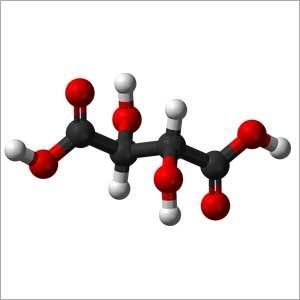
Tell us about your requirement

Price:
Quantity
Select Unit
- 50
- 100
- 200
- 250
- 500
- 1000+
Additional detail
Mobile number
Email

More Products in Speciality Chemical Category
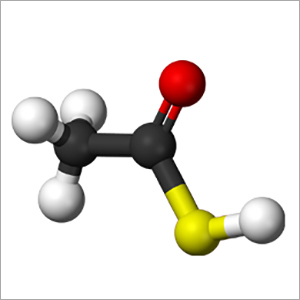
Thioacetic Acid (TAA)
Price 1 INR / Kilograms
Minimum Order Quantity : 1 Kilograms
HS Code : 29309099
EINECS No : 2080664
Shelf Life : 12 months (under proper storage conditions)
Shape : other, Liquid form
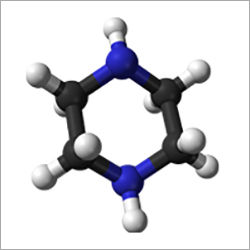
Piperazine Anhydrous
Price 1 INR / Kilograms
Minimum Order Quantity : 1 Kilograms
HS Code : 293359
EINECS No : 2038083
Shelf Life : 2 Years
Shape : other, Crystalline
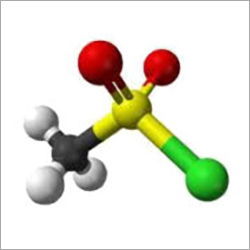
Methane Sulfonyl Chloride
Price 1 INR / Kilograms
Minimum Order Quantity : 1 Kilograms
HS Code : 29049090
EINECS No : 2047082
Shelf Life : 24 Months
Shape : other, Liquid form
Thiophenol
Price 1 INR / Kilograms
Minimum Order Quantity : 1 Kilograms
HS Code : 29309020
EINECS No : 2036353
Shelf Life : 2 years under recommended storage
Shape : other, Liquid form

SHILPA CHEMSPEC INTERNATIONAL PRIVATE LIMITED
GST : 27AAJCS5687F1ZU
GST : 27AAJCS5687F1ZU
Contact
- 316/317, Parekh Market, 3rd Floor 39, Jss Road, Near Kennedy Bridge, Opera House,Mumbai - 400004, Maharashtra, India
- Phone : 08045479650
- Mr. Divyesh (Director)
- Mobile : 08045479650
- Mr Mehul Sanghvi (Director-Business Development)
- Mobile : 08045479650
-
 Send Inquiry
 Send Inquiry
 Send SMS
 |
SHILPA CHEMSPEC INTERNATIONAL PRIVATE LIMITED
All Rights Reserved.(Terms of Use) Developed and Managed by Infocom Network Private Limited. |
